

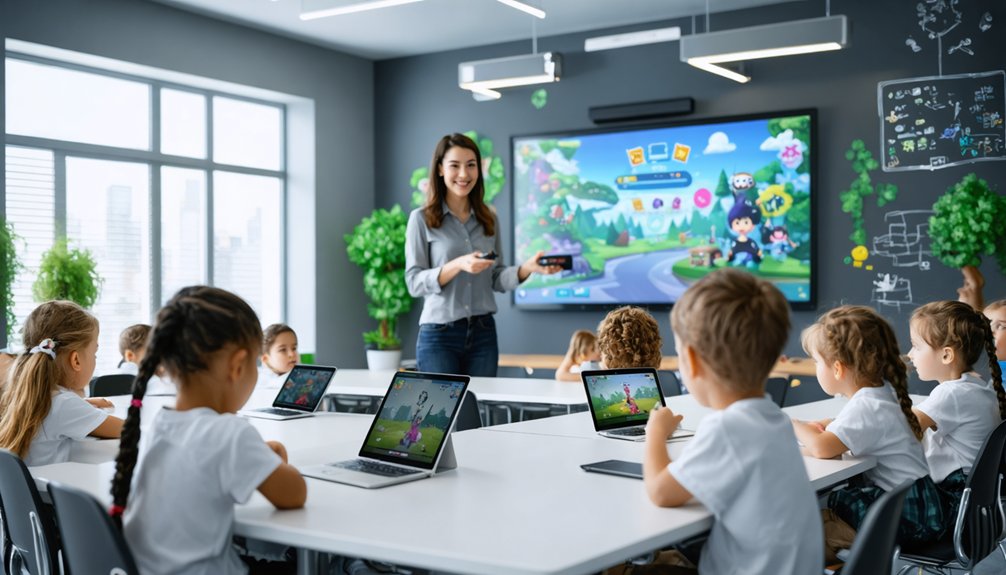

Gamification in Education: A New Era of Learning
In 2025, teachers are using gamification to create interactive and immersive learning experiences that boost student motivation, engagement, and academic outcomes. By incorporating game design elements, such as rewards and challenges, educators are promoting active learning and fostering a sense of community among students.
Technology, including virtual reality (VR) and artificial intelligence (AI), is playing a vital role in shaping these learning experiences. For instance, AI-powered adaptive learning systems can adjust the difficulty level of course materials based on individual students’ progress, ensuring they stay engaged and motivated.
The use of gamification in education is not just about making learning fun; it’s about creating a more effective and efficient way of teaching. By providing students with real-time feedback and assessment, educators can identify areas where students need extra support, allowing for more targeted interventions.
As gamification continues to evolve, we can expect to see new trends and innovations emerge. For example, the use of social learning platforms can facilitate collaboration and peer-to-peer learning, while AI-powered chatbots can provide personalized support to students.
“Gamification is not just about adding points and badges to a learning experience; it’s about creating a deeper connection with the material and a sense of agency among students,” says a leading expert in education technology.
By harnessing the power of gamification, educators can create a more engaging, interactive, and effective learning environment that prepares students for success in the 21st century.
Highlights
Gamification in Education: A Key to Unlocking Student Potential
Teachers are tailoring learning experiences to individual students’ needs and abilities through gamification. This approach involves creating customized strategies for various subjects, including math, language, science, and history, to increase student engagement and improve academic outcomes.
Harnessing Technology for Effective Gamification
Effective gamified learning experiences rely heavily on technology integration, including AI, AR, and VR. These tools help promote student engagement and motivation, making learning more enjoyable and interactive.
Data Analytics: A Crucial Component of Gamification
Teachers are using data analytics tools to track student progress, measure the effectiveness of gamification strategies, and inform decisions on adjustments. This data-driven approach ensures that gamification strategies are optimized to meet the unique needs of each student.
Emerging Technologies in Educational Gamification
Advances in adaptive learning systems and AI-driven analytics are transforming educational gamification. These innovations enable teachers to create personalized learning experiences that cater to the diverse needs of their students, leading to improved academic outcomes.
“Gamification is not just about making learning fun; it’s about creating a more effective and engaging learning experience that prepares students for success in the long run.”
The Rise of Gamification in Education
The integration of game design elements in educational settings has gained momentum, driven by its potential to boost student motivation. By incorporating game mechanics like rewards, leaderboards, and challenges into traditional teaching methods, educators aim to create a more engaging learning experience. This approach, known as gamification in education, promotes active learning and improves academic outcomes.
Gamification helps create immersive and interactive experiences that foster a sense of community and belonging among students. As a result, it is becoming a crucial tool in modern education, making the learning experience more effective and enjoyable.
Educators are using game design principles to make learning more engaging. For instance, rewards can be used to motivate students to complete assignments on time, while leaderboards can encourage healthy competition among students. Challenges can also be used to help students develop problem-solving skills.
The rise of gamification in education is driven by its potential to improve academic outcomes. By making learning more engaging, educators can increase student participation and reduce dropout rates. Gamification also helps educators create personalized learning experiences tailored to individual students’ needs.
“Gamification is not just about adding game elements to education; it’s about creating a more engaging and effective learning experience,” says a leading expert in the field.
Designing Engaging Learning Experiences
Designing engaging learning experiences requires a thoughtful and structured approach. Educators know that interactive and immersive experiences spark curiosity and encourage connection, leading to better learning outcomes.
To create such experiences, educators are incorporating interactive storytelling and immersive environments into their teaching practices. By integrating learning objectives with interactive elements, educators can create a narrative that resonates with learners.
Virtual and augmented reality environments further enhance the sense of presence and agency, drawing learners into the learning experience. This thoughtful integration of interactive elements and immersive environments helps create learning experiences that are both memorable and impactful.
Incorporating interactive storytelling into educational experiences has shown promise in enhancing learner engagement. By crafting narratives that weave together learning objectives and interactive elements, educators can create an engaging narrative that resonates with learners.
This approach helps learners connect emotionally with the material, leading to deeper learning outcomes.
Immersive environments, such as virtual and augmented reality, are also being used to enhance the learning experience. These environments provide learners with a sense of presence and agency, drawing them into the learning experience.
By leveraging these environments, educators can create interactive and immersive experiences that simulate real-world situations, making learning more relevant and effective.
To create engaging learning experiences, educators must thoughtfully integrate interactive elements and immersive environments into their teaching practices. By doing so, they can create learning experiences that are both memorable and impactful, ultimately driving deeper learning outcomes.
As one educator noted, “The key to creating engaging learning experiences is to design interactive and immersive experiences that spark curiosity and encourage connection.”
Gamification Strategies for Different Subjects
Tailoring Gamification to Specific Subjects
Gamification strategies can be customized to fit various subjects, increasing their effectiveness in promoting learner engagement and outcomes. For example, math challenges designed to promote problem-solving skills can make the subject more engaging, while language quests can encourage learners to develop linguistic proficiency.
Interactive science simulations can facilitate hands-on learning, and history excursions can make the past more accessible and interesting. By designing gamification approaches around specific subjects, educators can cater to diverse learning needs and preferences, creating more inclusive and effective learning environments.
Learners can develop a deeper connection to the subject matter, leading to better outcomes. In math, challenges can focus on logical reasoning and problem-solving, while in language, quests can encourage learners to develop reading and writing skills.
Subject-Specific Gamification Approaches
- Math: Challenges and puzzles that promote logical thinking and problem-solving skills.
- Language: Quests and games that encourage linguistic proficiency, such as reading and writing skills.
- Science: Interactive simulations and experiments that facilitate hands-on learning.
- History: Excursions and interactive timelines that make the past more accessible and engaging.
- Art: Competitions and projects that inspire creativity and self-expression.
- Music: Games and activities that develop auditory skills and musical appreciation.
- Coding: Puzzles and challenges that cultivate logical thinking and programming skills.
- Geography: Explorations and interactive maps that broaden spatial awareness and cultural understanding.
The Role of Technology in Gamified Learning
Technology’s Impact on Gamified Learning
The integration of technology with gamification strategies is vital for creating engaging and effective learning experiences in modern education. Virtual reality, mobile apps, and online platforms enable teachers to develop interactive simulations that promote student engagement and deeper learning. Adaptive learning systems use data analytics to tailor instruction to individual students’ needs, while collaborative tools facilitate teamwork and social learning.
By incorporating these technologies, educators can create immersive experiences that foster meaningful learning and student success. The use of technology in gamification enhances the learning experience, making it more enjoyable and interactive for students. As a result, students are more likely to develop a sense of belonging and motivation, driving improved academic outcomes.
Effective technology integration is key to unlocking the full potential of gamification in education. By harnessing the power of technology, educators can create personalized learning experiences that cater to individual students’ needs, leading to better academic performance and increased student satisfaction.
“A well-designed gamification strategy, combined with the right technology, can make learning feel like play, increasing student engagement and motivation.”
In the context of gamified learning, technology plays a crucial role in creating interactive and immersive experiences that promote deeper learning and student engagement. The strategic use of technology can help educators develop adaptive learning systems, collaborative tools, and interactive simulations that cater to individual students’ needs, leading to improved academic outcomes and increased student satisfaction.
Overcoming Challenges and Avoiding Pitfalls
Overcoming Challenges in Gamification Implementation
Implementing gamification in education can be hindered by numerous challenges and pitfalls, requiring educators to plan carefully and make strategic decisions. To address these challenges, teachers need comprehensive training to effectively integrate gamification into their teaching methods.
Student motivation is also crucial, and educators must ensure that gamification elements align with students’ intrinsic interests. Assessment challenges pose a significant obstacle, as educators must balance evaluation needs with the potential for gamification to undermine student motivation.
Additionally, resource limitations, equity issues, and curriculum alignment must be addressed to ensure gamification is accessible to all students. By acknowledging and proactively addressing these challenges, educators can harness the full potential of gamification to create an engaging and inclusive learning environment.
Effective gamification implementation requires educators to consider multiple factors, including student engagement, motivation, and assessment. By prioritizing these factors and addressing potential challenges, educators can create a supportive learning environment that fosters student success.
As educator and gamification expert, Mikki Hax, states, “Gamification is not a magic bullet, but rather a powerful tool that can enhance learning when implemented thoughtfully and with careful consideration of the challenges involved.”
Measuring the Effectiveness of Gamification
Measuring the Effectiveness of Gamification in Classrooms
To determine the success of gamification efforts, educators must track student engagement, progress, and outcomes. Data analytics tools provide valuable insights into how students interact with gamified content, identifying areas of strength and weakness. Analyzing this data allows teachers to refine their gamification strategies to better meet student needs.
By evaluating the impact of gamification on student motivation, learning outcomes, and academic performance, educators can make informed decisions about its use in their classrooms.
Teachers can use data analytics tools to assess student engagement and progress, providing a clear understanding of how gamification affects learning outcomes. By regularly reviewing this data, educators can adjust their gamification strategies to address areas where students may be struggling.
This approach enables teachers to create a more effective learning environment, tailored to the needs of their students.
Measuring Gamification’s Impact
To measure the effectiveness of gamification, educators should focus on key performance indicators (KPIs) such as student engagement, progress, and academic performance. By tracking these metrics, teachers can evaluate the success of their gamification efforts and make data-driven decisions to improve student outcomes.
Refining Gamification Strategies
Analyzing data from gamification efforts allows educators to refine their strategies and create a more effective learning environment. By identifying areas of strength and weakness, teachers can adjust their approach to better meet the needs of their students.
This iterative process enables educators to optimize their gamification strategies, leading to improved student outcomes and academic performance.
“Gamification is not a one-size-fits-all solution. By regularly assessing its effectiveness and refining our approach, we can create a more engaging and effective learning environment for our students.”
Future Trends and Innovations in Educational Gamification
The Evolution of Educational Gamification
Educational gamification is transforming the way we learn by incorporating cutting-edge technologies like artificial intelligence, augmented reality, and virtual reality. These innovations enable the creation of immersive and interactive learning experiences that captivate students’ attention.
By utilizing immersive storytelling, educational gamification increases learner motivation and emotional investment, making complex concepts more accessible.
Personalized Learning with AI-Driven Analytics
The integration of AI-driven analytics allows for real-time feedback and assessment, providing teachers with valuable insights into student performance.
Adaptive learning systems adjust difficulty levels and content to individual students’ needs, ensuring a tailored learning experience. This personalized approach helps students grasp challenging concepts, leading to improved academic achievement.
A Promising Future for Educational Gamification
As emerging technologies continue to advance, educational gamification is poised to become an even more effective tool for enhancing student engagement, retention, and overall academic success.
With its ability to make learning fun and interactive, educational gamification has the potential to revolutionize the education sector.
According to a leading expert in the field, “Educational gamification is not just about making learning fun; it’s about creating a more effective and efficient way of learning that prepares students for success in an increasingly complex world.”
By harnessing the power of emerging technologies, educational gamification is set to play a vital role in shaping the future of education.
As the education sector continues to evolve, it’s essential to stay informed about the latest developments and innovations in educational gamification.
Conclusion
Gamification has become a staple in educational environments worldwide by 2025. Teachers utilizing its potential have seen significant increases in student engagement and motivation. The effective implementation of gamification has yielded promising results, with technology playing a key role in scaling these learning experiences. Educators must stay updated on emerging trends and innovations to ensure gamification remains a valuable tool in modern education.
Modified to:
In 2025, gamification is a key component of educational settings globally. Student engagement and motivation have surged as teachers tap into its potential. Successful implementation has led to encouraging outcomes, with technology instrumental in expanding these learning experiences. To maximize the benefits of gamification, educators should stay informed about the latest developments and advancements in the field.